
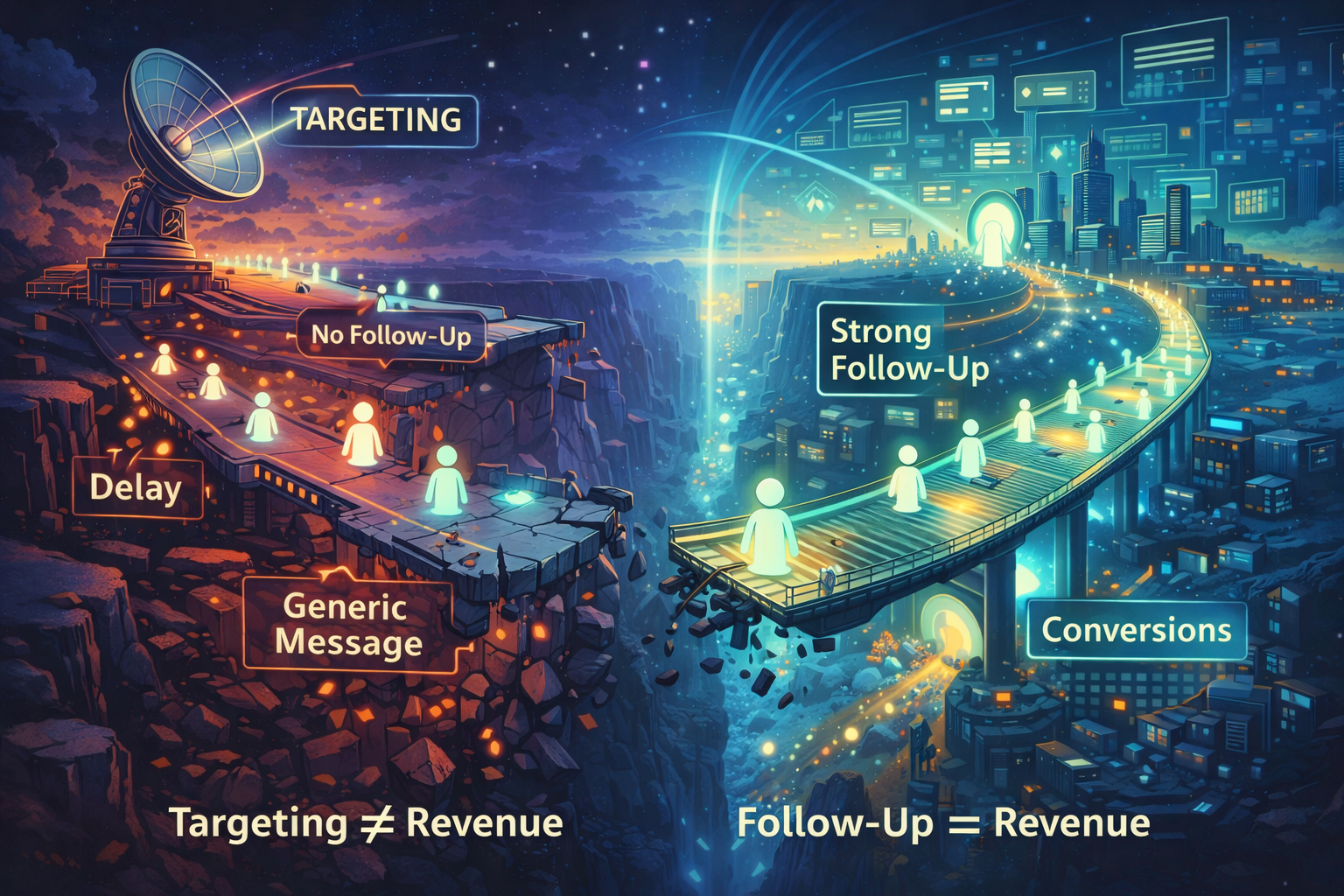
Follow-up impacts ad performance more than targeting because most conversions happen after the click, not at the moment of it. Even well-targeted ads fail when leads are contacted slowly, inconsistently, or without context.
Targeting gets attention.
Follow-up turns attention into revenue.
Many businesses focus heavily on audiences, keywords, and platforms while ignoring what happens once a lead is generated. That imbalance is one of the biggest reasons ads underperform.
How does follow-up impact ad performance more than targeting?
Follow-up directly affects whether paid leads turn into conversations, appointments, and sales. In many cases, improving follow-up produces better results than changing ads or targeting settings.
The main ways follow-up impacts performance include:
- Speed of first response
Leads are most responsive immediately after converting. Delays reduce contact rates and increase the chance that leads lose interest or choose a competitor. - Consistency across attempts
Many leads require multiple touchpoints. Businesses that stop after one or two attempts often leave revenue on the table. - Clarity of communication
Follow-up messages should remind leads why they reached out and what happens next. Vague or generic messages reduce trust. - Alignment with the original ad
When follow-up reflects the promise and language of the ad, the experience feels connected. Mismatched messaging creates confusion. - Operational readiness
Even strong ads fail if teams are unprepared to handle lead volume. Follow-up must match capacity.
Why targeting is often overvalued
Targeting matters, but it is not the final determinant of success. Well-targeted traffic still requires a system that responds effectively.
In many cases, businesses can double results by fixing follow-up without touching targeting at all.
Ads create opportunities, not outcomes
Ads open the door.
Follow-up determines what happens next.
This is why high-performing campaigns are supported by clear processes, response expectations, and accountability.
When follow-up is strong, ads feel predictable.
When follow-up is weak, ads feel risky.
How to improve follow-up without increasing ad spend
Improving follow-up does not require more traffic. It requires intention.
Simple improvements like faster response times, clearer messaging, and consistent outreach often have a greater impact than launching new campaigns.
Follow-up is not a secondary task.
It is part of the advertising system.