
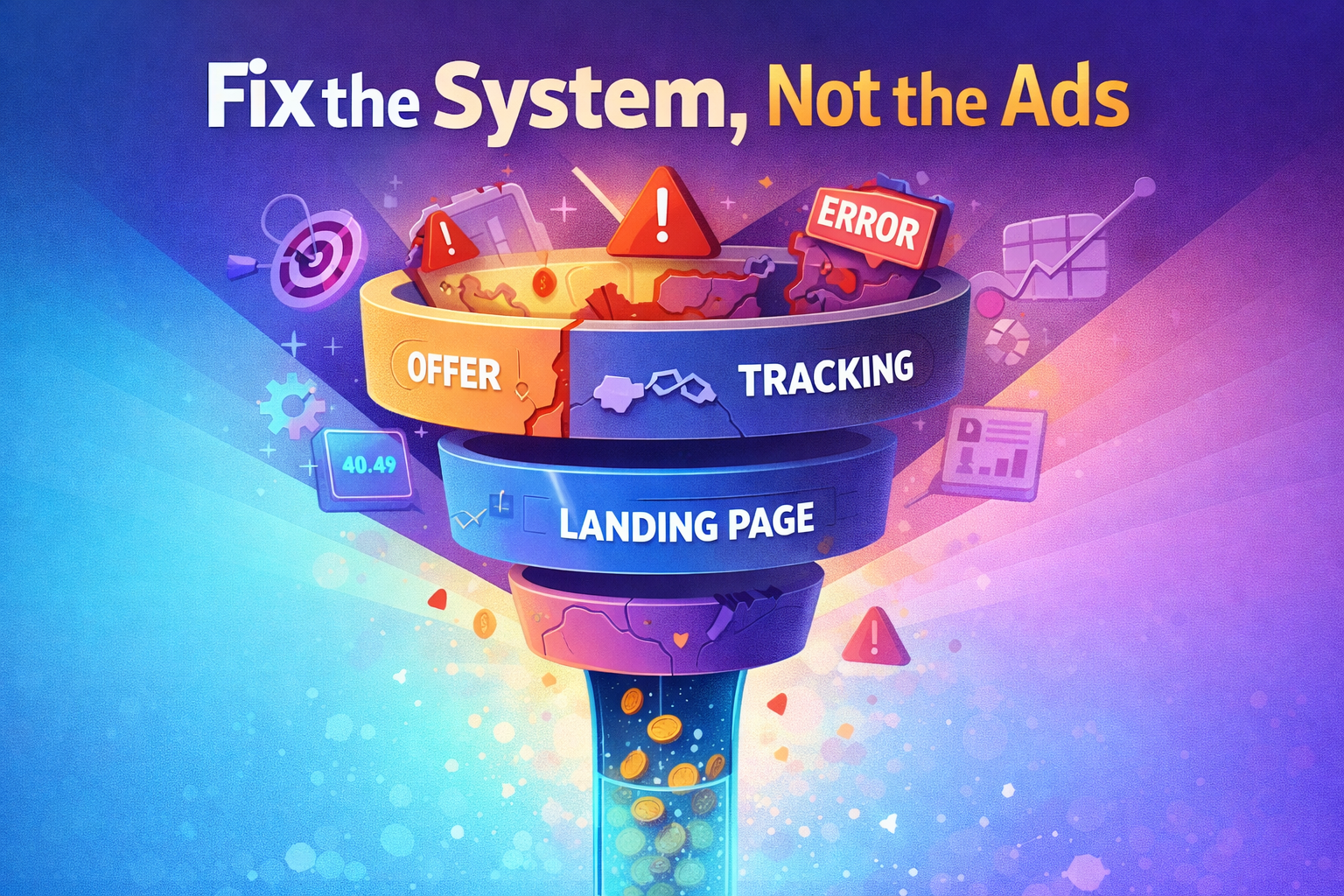
When ads are not performing, the first thing to fix is clarity in the system, not the ads themselves. Most performance issues come from unclear offers, weak pages, broken tracking, or inconsistent follow-up, not from the platform or targeting.
Changing ads too early often hides the real problem.
Structure should be fixed before optimization.
Many businesses react to poor results by constantly adjusting settings. That usually creates more noise instead of improvement.
What should you fix first when ads aren’t performing?
When ads underperform, problems usually appear in predictable places. Fixing issues in the right order prevents wasted time and budget.
The most important areas to review first include:
- The offer and message clarity
If the offer is unclear or generic, ads struggle regardless of targeting. Visitors must immediately understand what problem is being solved and what happens next. - The landing page experience
Low conversion rates often indicate page issues, not traffic issues. Pages should match the ad message and guide visitors toward one action. - Conversion tracking accuracy
If tracking is incorrect or incomplete, performance decisions are based on assumptions. Reliable data is required before making changes. - Follow-up speed and consistency
Leads that are not contacted quickly lose value. Slow or inconsistent follow-up can make working ads appear broken. - Budget and expectations>
Very small budgets or unrealistic timelines often prevent learning. Ads need enough volume and time to reveal patterns.
Why ads are rarely the first problem
Ads are visible, so they are often blamed first. In reality, ads simply expose weaknesses elsewhere in the system.
Fixing the foundation usually improves performance without changing ads at all.
What happens when you fix things in the wrong order
Optimizing targeting or creatives before fixing structure often leads to inconsistent results. Changes stack on top of broken systems and make performance harder to understand.
Progress comes from simplification, not constant adjustment.
How to approach fixes the right way
Start by diagnosing clarity, structure, and flow. Once those are solid, optimization becomes easier and more predictable.
When ads aren’t performing, the solution is usually closer to the system than the platform.