
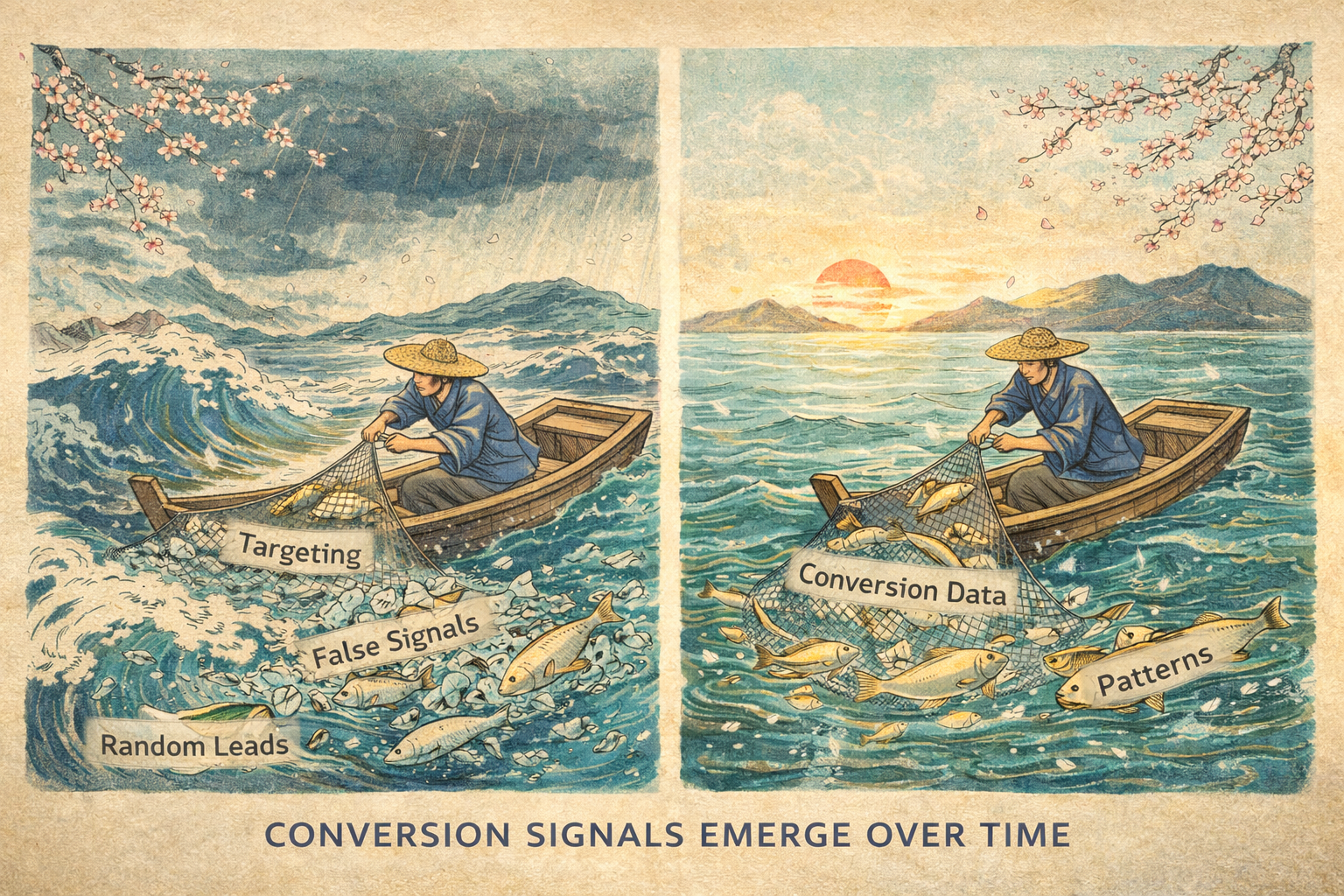
Paid ads usually take time to start working because performance improves through testing, data collection, and system alignment. While some campaigns generate early leads, consistent results typically come after patterns emerge and adjustments are made.
Ads are not instant wins.
They are feedback systems.
Many businesses expect immediate profitability and become frustrated when results fluctuate early. That expectation gap is one of the biggest reasons paid advertising gets abandoned too soon.
How long does it take for paid ads to start working?
The time it takes for paid ads to work depends on how quickly a campaign can gather data and how prepared the business is to act on it. There is no fixed timeline, but there are predictable phases.
Most campaigns move through the following stages:
- Initial launch and learning
Early results are often inconsistent. Ads are gathering data, audiences are being tested, and platforms are learning who responds. - Pattern recognition
After enough traffic and conversions, trends begin to appear. This is when decisions become data-driven instead of assumptive. - Optimization and refinement
Ads, landing pages, and follow-up processes are adjusted based on performance. This stage improves efficiency and consistency. - Stability and predictability
Once systems are aligned, results stabilize. Lead flow becomes more predictable and scalable. - Scaling and expansion
Only after consistency is established does increasing spend make sense. Scaling too early often amplifies inefficiencies.
Why early results can be misleading
Early performance does not always reflect long-term potential. A few good or bad days do not define a campaign.
Stopping too early often means stopping before learning begins.
Ads need time to surface what works.
What slows results down the most
Paid ads take longer to work when:
- Budgets are too small to generate data
- Landing pages are unclear or unfocused
- Tracking is incomplete
- Follow-up is slow or inconsistent
These issues delay learning and make results feel unpredictable.
How to approach timelines realistically
Instead of asking how fast ads will work, businesses should ask how quickly they can learn.
Learning speed determines success.
When expectations are realistic and systems are prepared, paid ads become less stressful and more reliable over time.