
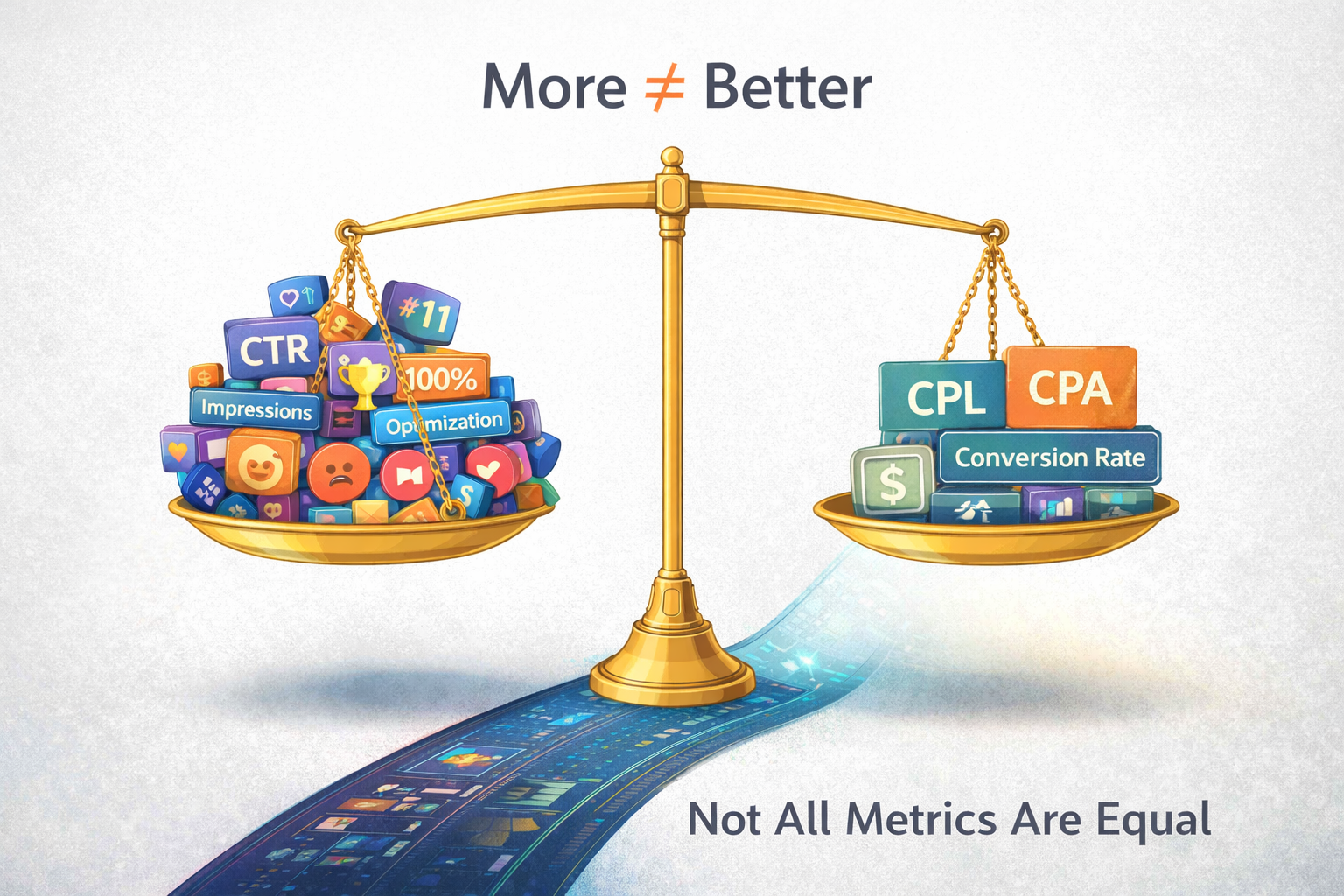
The data that matters in paid advertising is the data that shows whether ad spend turns into real business outcomes. Metrics that do not influence decisions or revenue are distractions, even if they look impressive.
More data does not mean more clarity.
Relevant data does.
Many businesses track dozens of metrics but still feel unsure about performance. That confusion usually comes from focusing on surface-level numbers instead of decision-making signals.
What data actually matters in paid advertising (and what doesn’t)?
Paid advertising platforms provide an overwhelming amount of information. Not all of it is useful, and some of it actively misleads decision-making.
The data that matters most includes:
- Cost per lead or conversion
This shows how efficiently ads generate outcomes. It is more meaningful than clicks or impressions. - Conversion rate
Conversion rate reveals whether the page and offer resonate with traffic. Low conversion rates often indicate messaging or page issues. - Lead quality and downstream results
Not all leads are equal. Tracking which leads turn into conversations or sales provides real insight into performance. - Cost per acquisition
For businesses tracking revenue, this shows the true cost of growth. It connects ad spend to business outcomes. - Response and follow-up speed
Follow-up metrics influence performance just as much as ad metrics. Slow response times reduce the value of traffic.
Data that matters less than people think
Some commonly watched metrics rarely improve decision-making on their own.
These include:
- Click-through rate without conversion context
- Impressions without intent
- Platform-reported optimization scores
- Vanity engagement metrics
These numbers can look good while performance remains poor.
Why fewer metrics often lead to better decisions
High-performing advertisers focus on a small set of indicators they trust. Fewer metrics create clarity and faster optimization.
When teams track everything, they often change too much and lose consistency.
Good data should guide action, not overwhelm it.
How to use data the right way
Data should answer one question:
What should we do next?
If a metric does not influence a decision, it does not deserve attention.
Paid advertising improves when data is treated as a feedback system instead of a scoreboard.